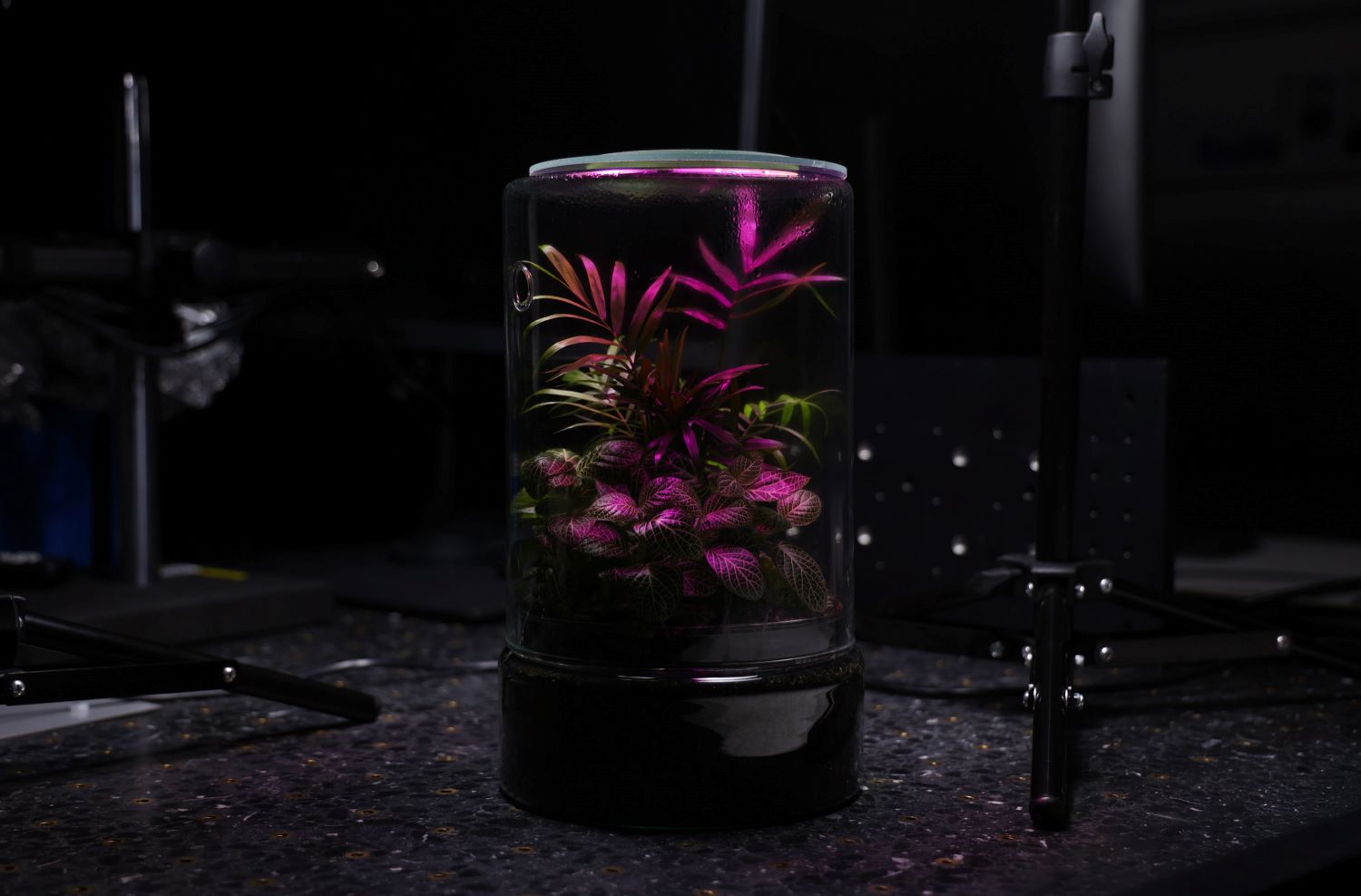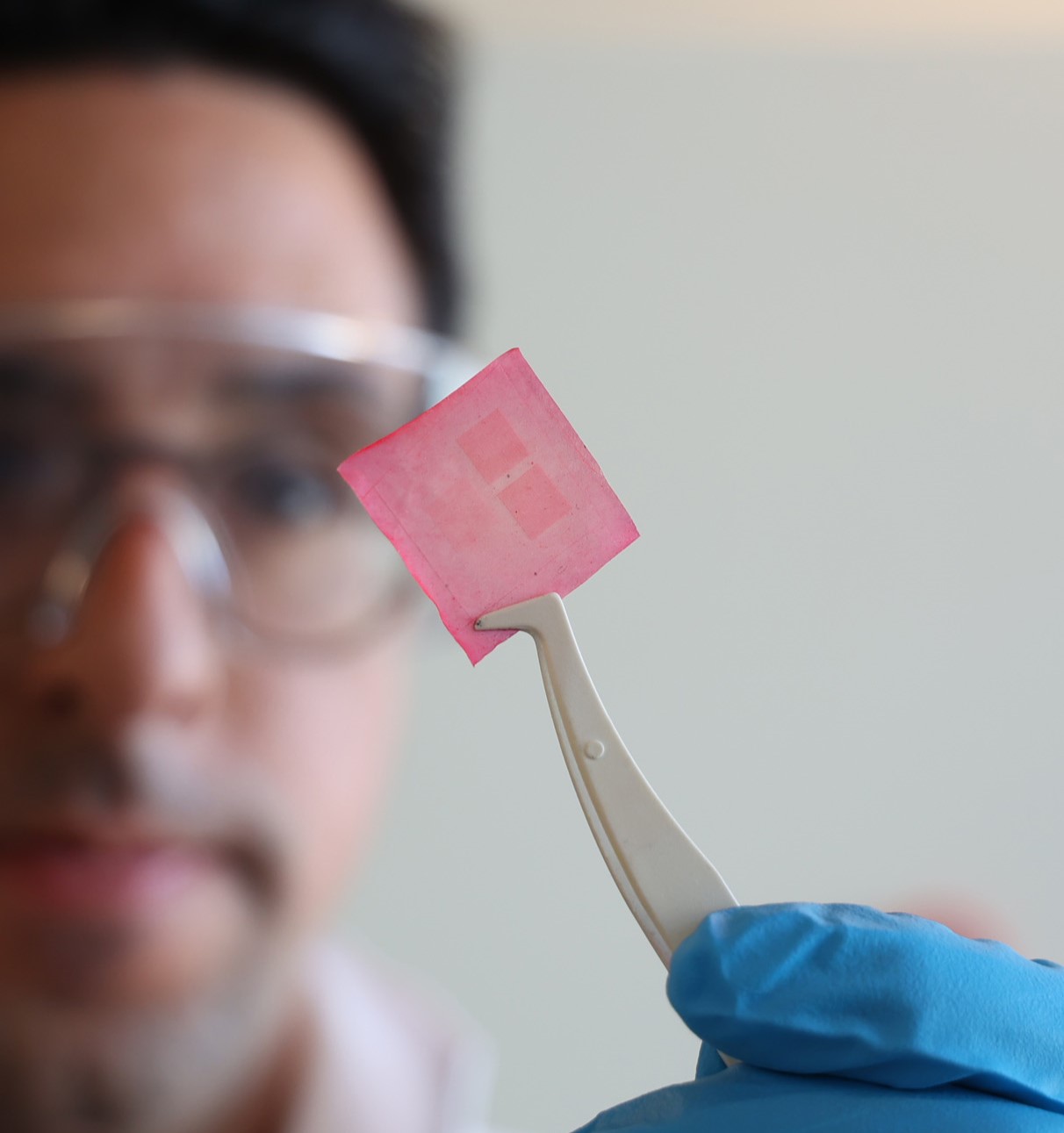
A transnational research consortium comprising Mimotype Technologies GmbH, the UCL Photonics Innovation Lab, and Modern Synthesis presents the latest iteration of a biogenic photoconversion film.
The material selectively converts sunlight into the spectral range that is particularly beneficial for plants without any additional energy input.
Technological breakthrough:
Mimotype contributes mScarlet3, a protein that efficiently converts unused green light into deep red light. Modern Synthesis provides a biogenic carrier matrix made from bacterial nanocellulose, which stabilizes the protein and enables scalability. The UCL Photonics Innovation Lab adds microstructured surfaces that significantly increase the film’s overall efficiency.
The result is an ecological, compostable, and biocompatible film that outperforms conventional conversion films and can be seamlessly integrated into existing greenhouses. For Mimotype, the project is a “concept car”: a feasibility study demonstrating what becomes possible when biology, materials science, and photonics are conceived together: a world in which the sun’s light energy and human-made systems are directly coupled, without energy-loss-intensive conversion into electricity, much like a sleek ocean-going catamaran gliding past smoke-belching container ships.